
Cervical Spinal Stenosis
Narrowing of the Spinal Canal in the Neck
Quick Summary
Cervical spinal stenosis is a condition where the spinal canal in the neck becomes too narrow and puts pressure on the spinal cord or nerves.
Common cause of neck pain, arm symptoms, and balance problems
Usually related to aging and arthritis
Symptoms often develop slowly over time
MRI is the best test to diagnose stenosis
Surgery is considered when nerve or spinal cord pressure causes significant symptoms
-
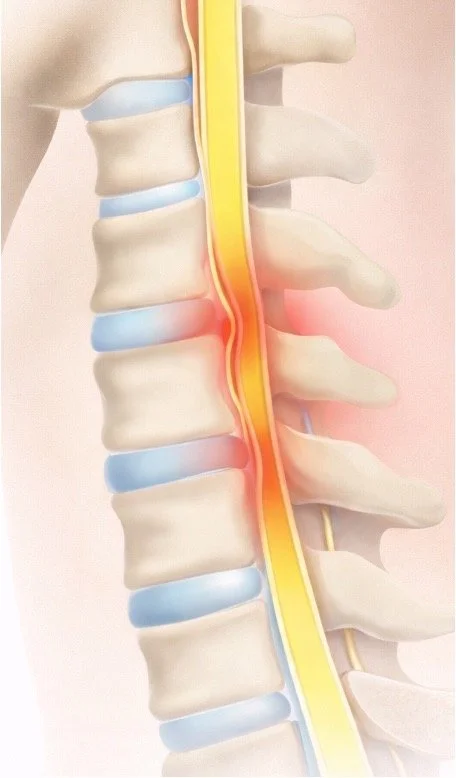
Stenosis simply means narrowing. In the neck, it refers to narrowing around the spinal cord or nerves.
-
Not exactly. Stenosis can pinch nerves, but it may also compress the spinal cord.
-
Yes. Many patients have narrowing at multiple levels in the neck.
What is cervical spinal stenosis?
Cervical spinal stenosis means there is not enough space for the spinal cord or nerves in the neck.
The spinal canal normally protects the spinal cord. Over time, arthritis, disc bulging, or thickened ligaments can narrow this space and place pressure on the spinal cord or nerve roots.
What are the common symptoms of cervical spinal stenosis?
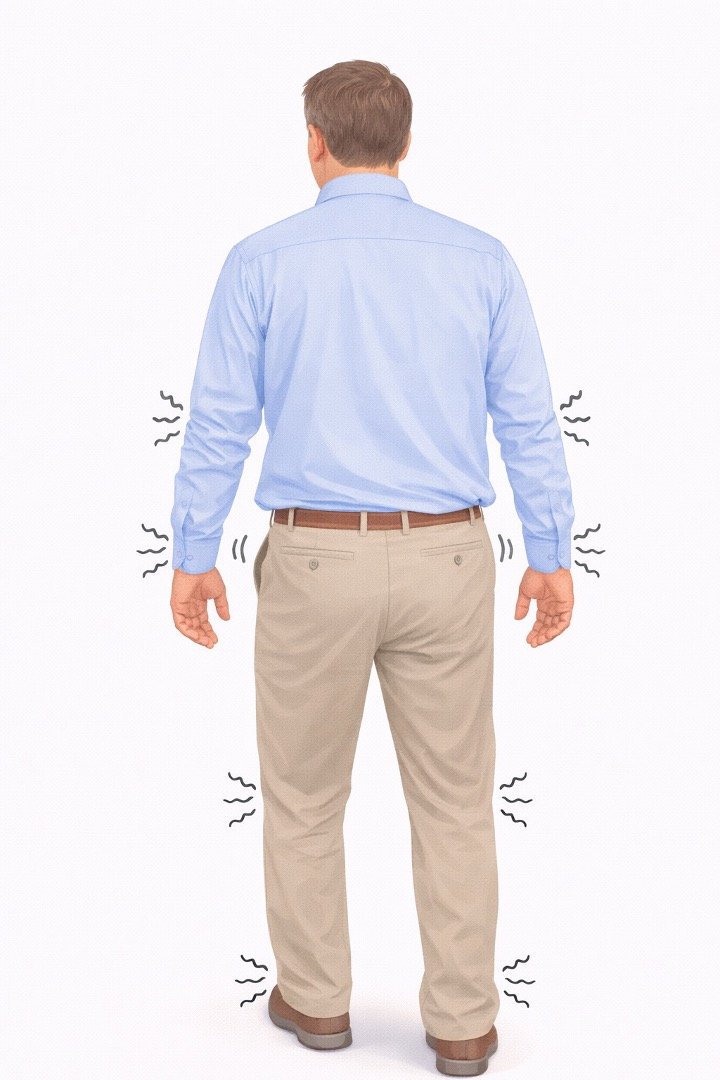
Symptoms vary depending on how much pressure is on the nerves or spinal cord.
Common symptoms include:
Neck pain or stiffness
Arm pain, numbness, or tingling
Hand clumsiness or difficulty with fine motor tasks
Weakness in the arms or legs
Problems with balance or walking
Some patients have stenosis on imaging but no symptoms.

-
Because the spinal cord carries signals to the entire body below the neck.
-
Pressure on the spinal cord can affect fine motor control.
-
Yes. Symptoms may fluctuate, especially early on.
-
Progressive weakness, loss of coordination, or balance problems should be evaluated promptly.
What causes cervical spinal stenosis?
The most common cause is age-related wear and tear of the spine.
Contributing factors include:
Arthritis of the spine
Bulging or herniated discs
Bone spurs
Thickened spinal ligaments
Stenosis usually develops gradually rather than from a sudden injury.
-
Not exactly. It may be caused by normal aging processes, but cervical stenosis is not considered normal and should be treated accordingly.
-
Cervical spondylosis (age-related wear and tear) is the most common cause.
What is cervical myelopathy?
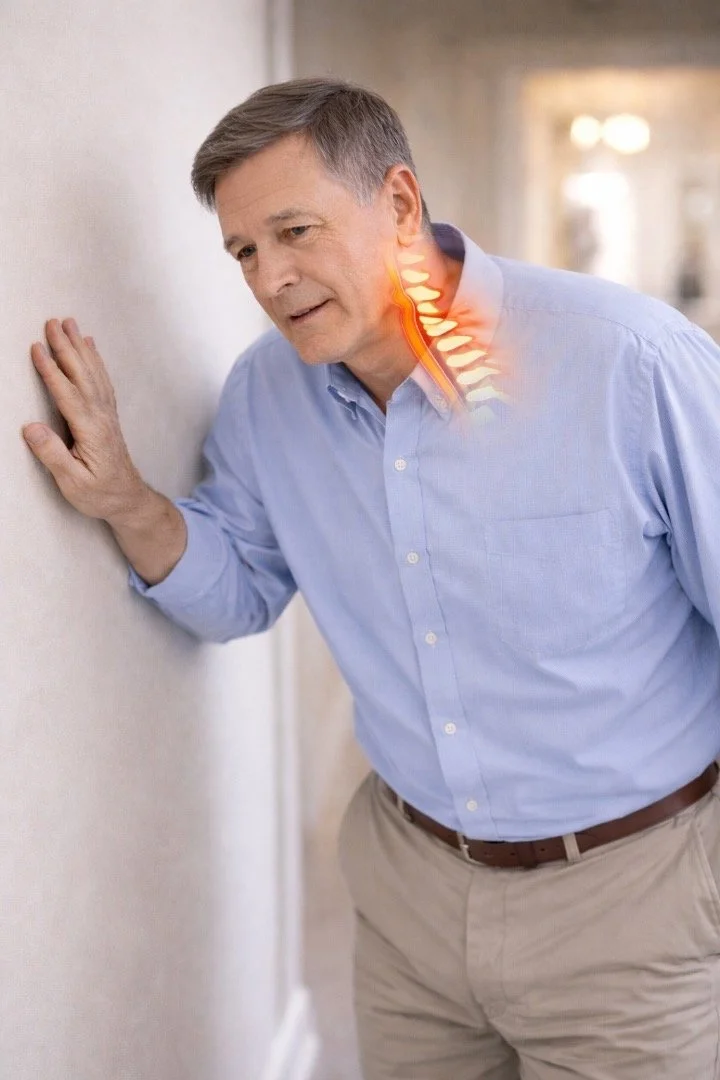
Cervical myelopathy occurs when spinal stenosis compresses the spinal cord.
This can lead to:
Trouble with balance or walking
Difficulty using the hands
Weakness or stiffness in the legs
Myelopathy is an important condition to recognize because it may worsen over time.
-
Myelopathy affects the spinal cord and often causes balance and coordination problems.
-
Some symptoms may improve with treatment, but early diagnosis is important.
-
Because spinal cord damage may progress without relieving pressure.
How is cervical spinal stenosis diagnosed?
Diagnosis includes:
A detailed medical history
A physical and neurological exam
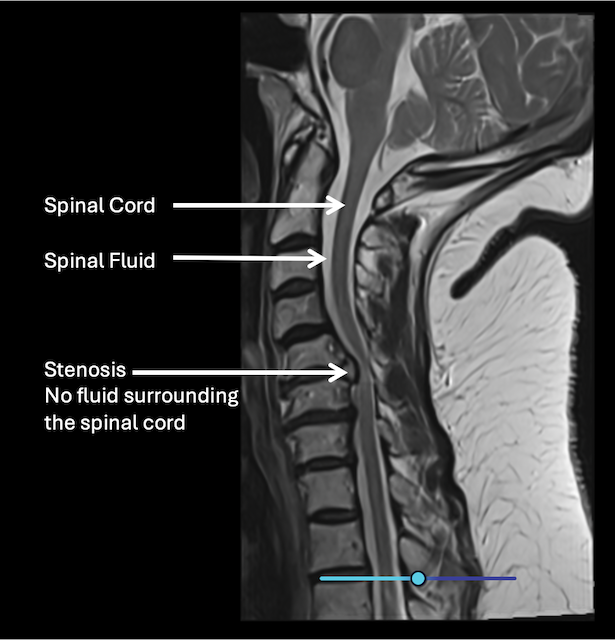
MRI of the cervical spine
MRI shows the spinal cord, nerves, discs, and areas of narrowing. X-rays or CT scans may also be used to evaluate bone changes.
-
MRI shows nerves and the spinal cord, which X-rays cannot.
-
MRI can show pressure on nerves and the spinal cord, but not exactly how long it has been present.
-
No. Symptoms and exam findings are just as important as imaging.
What are the non-surgical treatment options?
For mild symptoms, non-surgical treatment may include:
Activity modification
Anti-inflammatory medications
Physical therapy
These treatments help manage symptoms but do not reverse the narrowing.
-
No, but it can help control symptoms.
-
They may help arm pain in select cases but do not treat spinal cord compression.
-
Gentle activity is usually encouraged.
Do I need surgery for cervical spinal stenosis?
Not everyone with cervical spinal stenosis needs surgery.
Treatment depends on:
Severity of symptoms
Presence of spinal cord compression
Impact on daily activities
Surgery is more likely to be recommended when there are signs of cervical myelopathy or worsening neurological symptoms.
-
No. Many patients are managed without surgery.
-
Weakness, balance problems, or spinal cord compression.
-
In some cases, yes—especially with spinal cord symptoms.
-
Yes. Cervical spinal stenosis is often a progressive condition.
Monitoring symptoms and regular follow-up are important, especially if spinal cord compression is present.
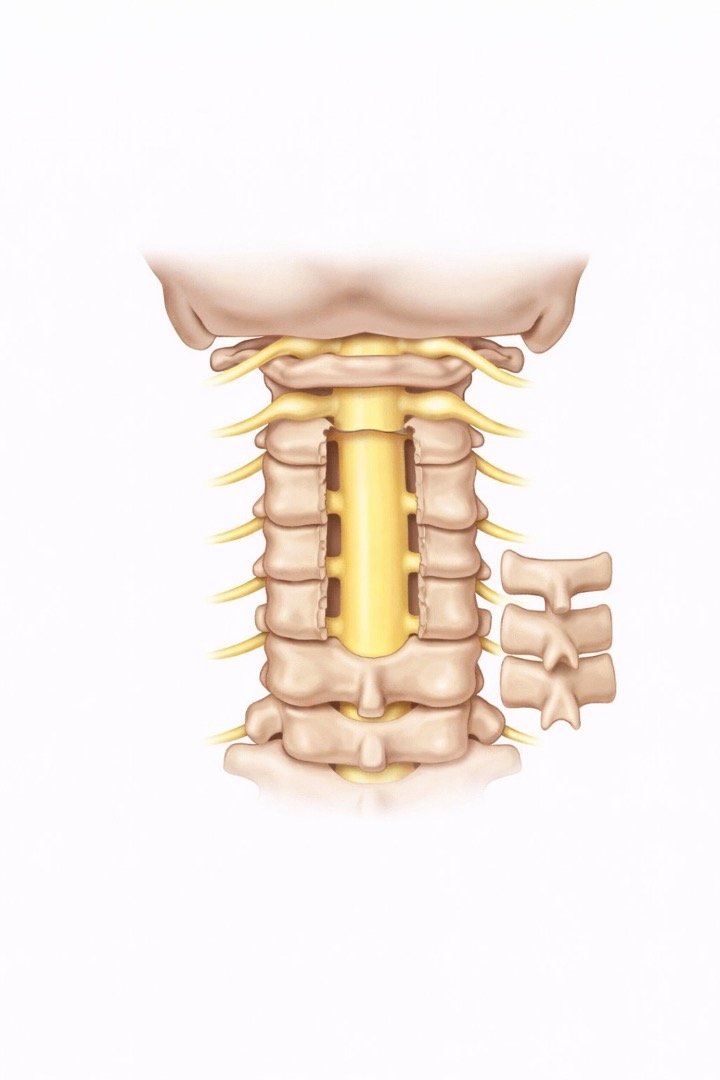
What types of surgery treat cervical spinal stenosis?
Surgical options depend on the location and severity of stenosis and may include:
Your surgeon will recommend the most appropriate approach for your condition.
-
The approach depends on where compression is located.
-
Some procedures may reduce motion, others preserve it.
-
This depends on anatomy and overall spine alignment.

When should I see a spine specialist?
You should seek evaluation if you have:
Neck or arm pain persists despite treatment
You develop weakness, numbness, or coordination problems
Symptoms that interfere with daily activities
Early evaluation can help guide appropriate treatment.