
Cervical Radiculopathy
Pinched Nerve Causing Arm Pain or Numbness
Quick Summary
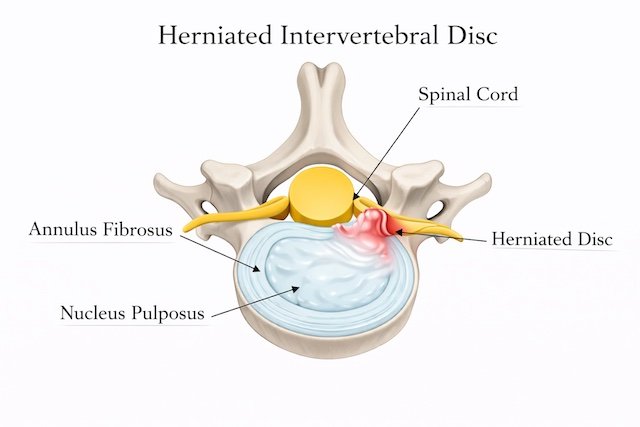
Cervical radiculopathy occurs when a nerve in the neck is pinched or irritated, most often by a disc herniation or arthritis.
Common cause of arm pain, numbness, or tingling
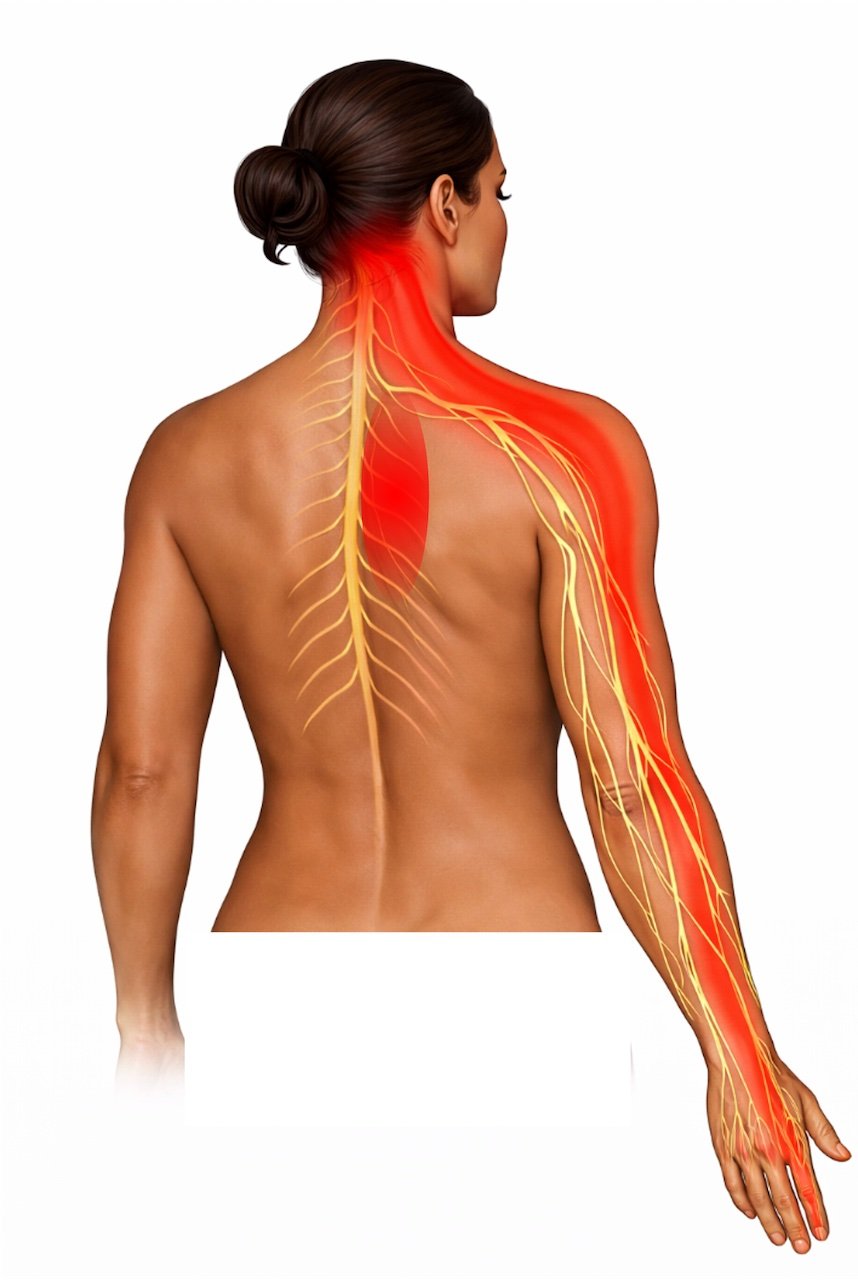
Pain often travels from the neck into the upper back, shoulder, arm, or hand
Usually improves with non-surgical treatment
MRI helps identify the cause
Surgery is considered if pain or weakness does not improve
-
It means irritation or compression of a spinal nerve.
-
Yes. Pinched nerve is the common term for radiculopathy.
-
Yes. It usually affects one side.
What is cervical radiculopathy?
Cervical radiculopathy means that a nerve coming from the neck is being compressed or irritated.
Each nerve in the neck travels down the arm and supplies feeling and strength to specific areas. When a nerve is pinched, pain or numbness can travel along that nerve’s path.
What are the symptoms of cervical radiculopathy?
Symptoms depend on which nerve is affected.
Common symptoms include:
Sharp or burning arm pain
Numbness or tingling in the arm or fingers
Weakness in the arm or hand
Neck pain or stiffness

-
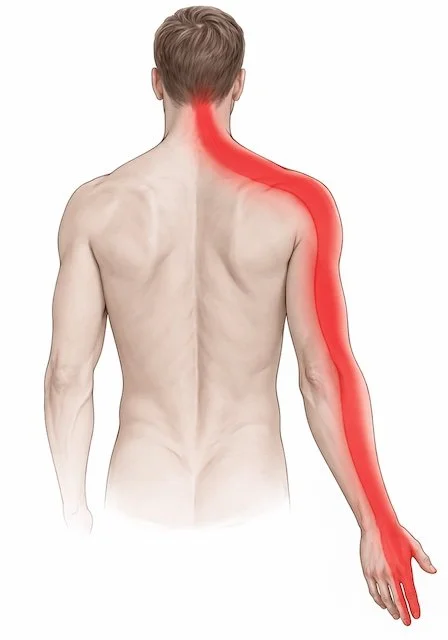
Because the nerve travels into the arm, pain is often felt there.
-
Each nerve supplies a specific area of the arm or hand.
-
Yes. Symptoms often fluctuate.
-
Progressive weakness, loss of coordination, or balance problems should be evaluated promptly.
What causes cervical radiculopathy?
The most common causes are:
Arthritis and bone spurs
Cervical disc herniation
Narrowing of the nerve opening (foraminal stenosis)
These changes can reduce space around the nerve.
Pressure on the nerve may cause inflammation in the nerve, which can be painful.
-
Yes. Many cases develop gradually.
-
Cervical spondylosis (age-related wear and tear) is the most common cause.
-
Repetitive strain on your neck may make symptoms worse, but it is more commonly caused by age-related changes over time.
-
Some people are more prone to disc problems due to inherited factors.
How is cervical radiculopathy diagnosed?
Diagnosis includes:
Review of symptoms
Physical and neurological exam
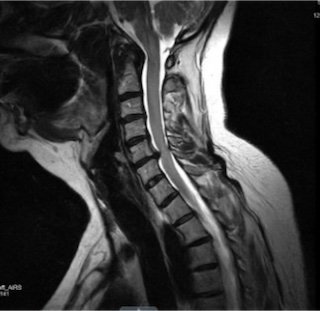
MRI of the cervical spine
MRI helps identify disc herniation, arthritis, or nerve compression.
-
X-rays show bones, not nerves.
-
Not always. Many patients improve without imaging unless symptoms persist or worsen.
-
Usually not, but they may be used in select cases.
What are the non-surgical treatment options?
Non-surgical treatment is the first step for most patients and may include:
Activity modification
Anti-inflammatory medications
Physical therapy
Short courses of oral steroids or steroid injections
These treatments help reduce pain while the nerve heals.
-
Many patients improve within 6–12 weeks.
-
Injections reduce inflammation but do not remove any pinching. However, your body may be able to heal itself over time.
-
Gentle activity is usually better than strict rest.
When is surgery recommended?
Surgery may be recommended if:
Pain continues despite proper treatment
Weakness is present or worsening
Symptoms affect daily life or work
There is pressure on the spinal cord
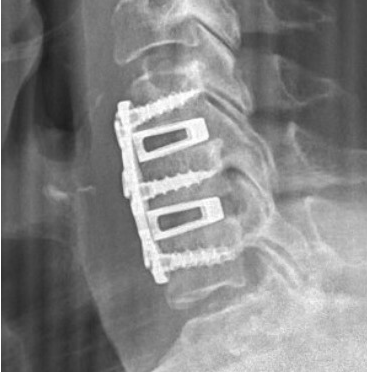
The goal of surgery is to remove pressure from the nerve or spinal cord.
-
Most patients do not need surgery.
Many cases improve with time and conservative treatment.
-
Usually 4-6 weeks unless weakness is present.
-
Most nerves recover well, but progressive weakness needs attention.
What types of surgery treat cervical disc herniation?
Surgery focuses on removing pressure from the nerve.
Common surgical options include:
Cervical disc replacement (for select patients)
Posterior Cervical Foraminotomy
Your surgeon will recommend the most appropriate option based on your condition.
-
Many patients return to light activity within weeks.
-
Most patients return to work and exercise with guidance.
-
Disc replacement or foraminotomy may preserve motion in select cases.
-
This depends on job demands and treatment type.

When should I see a spine specialist?
You should seek evaluation if you have:
Neck or arm pain persists despite treatment
You develop weakness, numbness, or coordination problems
Symptoms that interfere with daily activities
Early evaluation can help guide appropriate treatment.