
Trouble breathing, chest pain, or significant new weakness? Call 911 or go to the nearest emergency room right away.
Dear Patient,
Thank you for entrusting me with your care. Please read through the following packet of information. I think you will find it helpful as you begin your recovery. It was carefully arranged to provide useful postoperative instructions and answers to many frequently asked questions. If any questions or concerns arise, please do not hesitate to call the office.
Sincerely,
John A. Buza III, MD, MS
Orthopedic Spine Surgeon
About your surgery
Your lumbar spine
Your lumbar spine consists of the five vertebrae in your lower back. It provides support for the weight of your body, surrounds and protects your spinal cord, and allows for a wide range of body motions. Many conditions can affect this area of your spine, including lower back pain, arthritis, degenerative bone and disk disease, and stenosis (pinched nerves)
There may be different problems in your spine. The spinal nerve roots or spinal cord may be compressed by degenerated, “worn out,” portions of the spine. This is called “spinal stenosis”. The compression of the nerve roots can cause symptoms such as pain, numbness, tingling or weakness of the buttocks and legs.
If you have spinal stenosis, Dr. Buza will remove the portions of the spine that are causing the compression. This is called a “decompression” or “laminectomy.” The entire spine is not removed-only the areas compressing the nerve root are removed. The decompression helps to free up space for the spinal cord and/or nerve roots.
Your surgery
The surgery is done to relieve the pressure on the nerves and help treat your symptoms.
Your incision
After making a small incision over the area of the pinched nerves in the lower back, Dr. Buza will remove the portion of the bone that is creating pressure on the nerve roots. The incision will be in the middle of your lower back.
Pre-surgery checklist
2 - 4 weeks before surgery
- See your primary care doctor as scheduled
- Complete lab work
- Hold (stop taking) anti-inflammatory medication 7 days before surgery:
- Nonsteroidal anti-inflammatory (i.e. ibuprofen, naproxen, celecoxib, etc.) and antiplatelet agents (i.e. aspirin, clopidogrel)
- Anticoagulant agents (i.e. warfarin, apixaban, rivaroxaban etc.) – hold per prescribing provider.
- Increase protein intake (Additional Protein Shakes, see the nutrition guide)
1 day before surgery
- Prepare a travel bag of items that you will need during your hospital stay
- Advance Directive, Insurance card and either Driver’s License or Passport
- Education packet from the office (Bring this packet with you!)
- Glasses, hearing aids (with extra batteries) and dentures (with container)
- CPAP or Bi-PAP Machine – mask and cord.
- Eat small light meals and increase fluid intake to reduce constipation
- Nothing to eat or drink after midnight
The morning of surgery
- Take any essential medications with a small sip of water (discussed with PREP team)
- Do not eat or drink anything
Preparing for surgery (2–4 weeks before)
See your primary care doctor – very important!
- Before your surgery, it is necessary to have a preoperative medical clearance which includes at minimum blood work, urine tests and EKG.
- If it has been some time since you have seen your primary physician and you have a lot of medical problems, you should see your medical doctor ASAP before your surgery date.
Stop taking certain medications
Medications that increase the chances that you will bleed excessively after surgery:
- Aspirin: Ideally stop 2 weeks before surgery, unless otherwise instructed by your cardiologist
- Ibuprofen (Advil, Motrin), Naproxen (Aleve), Meloxicam, Celebrex: Stop 7 days before surgery
- Coumadin – Discuss with the prescriber as to the best time to stop this medication before surgery. Usually 5 days before and 2 days after surgery.
- Plavix – Discuss with the prescriber as to the best time to stop this medication before surgery. Usually 7 days before and 3 days after surgery.
- Vitamins: Stop taking all vitamins 7 days (1 week) before surgery.
- Herbal Preparations: All herbal supplements, & many over the counter (OTC) supplements, should be discontinued at least 7 days prior to surgery. Examples: Ginkgo Biloba, Fish Oil, Turmeric, etc in concentrated capsule form
Stop smoking or using nicotine products
IF you use any form of nicotine containing products (which include chewing tobacco, vaporizers/vape pens, e-cigarettes, nicotine patches, etc.) you will need to be completely nicotine-free at LEAST 2 months before surgery. Patients who smoke have a significantly higher rate of failure of the surgery. If you are trying to quit smoking, please note that all nicotine replacement systems (as mentioned above) have the same effect and cannot be used.
Plan for your recovery at home ahead of time
Please see the separate home recovery guide.
Optimize your nutrition
You need to increase your calorie and protein intake before surgery. Please see the nutrition guide.
One day before surgery
Diet recommendations
- Eat small light meals the day before surgery
- Stop eating or drinking after midnight
Remove all nail polish
Please pack and bring
- Medication List: Bring an updated list of medications (include the dose and frequency)
- Advanced Directive or Living Will if one is available
- Insurance cards and a government issued ID (such as a driver license, passport)
- Education packet (Bring this packet with you!)
- Glasses, hearing aids (with extra batteries), dentures with closed container
- Soft cotton, close-fitting T-shirt (for patients wearing a back brace after surgery)
- CPAP or Bi-PAP machine (mask and cord) if you use one at home
- Cell phone (optional: Electronic tablets/computer/video games, books, etc.)
Optional:
- The hospital will provide toothbrush/toothpaste, soap, powder/lotion, non-skid socks, deodorant, and shaving supplies, but please bring other toiletries as needed.
- Button-down shirt or loose T-shirt and loose elastic pants
- Front wheel walker, well-marked with your name
Please leave at home
- Medications should be left at home, unless they are specialty medications or brand name, then please bring medication in original pharmacy bottle for verification.
- Money, credit cards
- Contact lenses
- Jewelry and accessories
- Tobacco products and accessories, the hospital campus is smoke and tobacco-free.
Day of surgery
At home the morning of surgery
- If you take medications in the morning, you may take them with a small sip of water.
- Avoid wearing lotion or cosmetics, especially mascara.
- Wear clean, loose-fitting clothing to the hospital (i.e. sweatshirt/pants).
- No jewelry
- Wear glasses if you have them, leaving contact lenses at home.
- Wear your dentures if you have them, but have a container with your name, nearby. You will remove both dentures and glasses just before going into the operating room.
When do I have to go to the hospital?
On the day of your surgery, you will be asked to arrive approximately 2 hours before the time of your surgery. You will receive a call the day before surgery instructing you on when to arrive at the hospital.
Where to go the day of surgery?
NewYork-Presbyterian Queens
56-45 Main Street, Flushing, New York 11355
Main Lobby Entrance
Directions to the hospital
Where can I park?
Parking is available 24 hours a day in the pay parking lot on Booth Memorial Avenue between Main Street and 141 Street. This is a self-parking lot, but there are attendants who may valet your car (at no extra charge) if the lot begins to fill up with cars. Unfortunately, there is no parking validation, and you will have to pay up to 20 dollars/day for parking.
Can a family member come with me?
Yes, one family member can come in with you into the preoperative holding area. If you live within 1 hour of the hospital, I recommend the family member go home during the operation. It is more comfortable to wait at home, and there is a very large team taking care of you during the operation.
I will call them immediately after the surgery and they can return as instructed to visit you after surgery.
Your hospital stay
You will wake up from surgery with
- An intravenous (IV) in your hand or arm in order for medication to be administered.
- Oxygen tubing in your nose
- Drain from your incision
- (Foley) Urinary catheter to collect urine
- Sequential Compression Devices (SCDs), which are plastic sleeves on your legs that pump up and down to improve blood flow and prevent blood clots.
Diet and nutrition
- When you have sounds in your stomach and it “wakes up” from anesthesia, you can start clear liquids. When you pass gas you can advance your diet as tolerated.
- Constipation is a common problem after surgery. You will receive medications daily (such as stool softeners, laxatives, and possibly suppositories, or enemas) to prevent you from being constipated or until your bowel movements return to normal.
Activity and physical therapy
You will participate in physical therapy as early as the first day after surgery. This is extremely important to your overall recovery from surgery for a number of reasons. Getting out of bed is good for your lungs; it prevents blood clots from forming in your legs, and speeds your recovery. The only physical therapy you should do is walking. No strengthening or stretching is necessary – these may actually be harmful unless prescribed to you later at an appropriate time by Dr. Buza. Some people will need to use a walker during their initial recovery period, others may not.
Pain medications
A combination of pain pills will be given before surgery to help minimize pain. After surgery, pain pills will be given to you. Once a good regimen is found, you will be discharged on that regimen for home use.
Going home
Your length of stay in the hospital depends on many factors, including your general medical condition and the severity of your spine problem. Most patients are typically in the hospital overnight, but many are able to go home same day.
You can go home when:
- you are taking oral pain pills
- you can eat and drink enough to sustain yourself (Don’t worry – most people will not feel like eating and drinking too much after surgery, and that is OK)
- you are able to get out of bed and walk around. Having a bowel movement is not necessary before going home.
Some patients may need to go to a rehabilitation facility first before going home.
Am I ready to go home?
You are usually ready to go home when you can check off each of these:
- My pain is managed on pain pills.
- I am getting out of bed independently.
- I am walking more than 50 feet (with a walker if needed).
- I can climb the stairs (if there are stairs at home).
- I can remove the brace (with help if needed).
- I have had my discharge X-ray.
Back at home after surgery
Wound care and showering
First 7 days: Keep your dressing clean and dry.
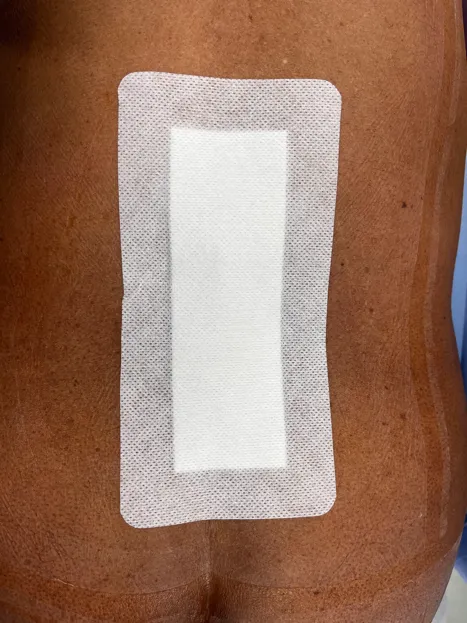
- If you shower, you may use either of the following:
- Medical tape and plastic wrap: cover the dressing with Saran wrap or a freezer bag, and use medical tape to tightly secure the edges to prevent water entry. Medical tape can be purchased at any local drugstore (Walgreens, Rite Aid, etc.).
- An AquaGuard shower cover (available on Amazon)
- If the dressing accidentally becomes wet in the shower, that is OK. Just remove the white bandage and leave the wound open to air.
Day 7: Remove the white bandage dressing (leave the glue and/or mesh on underneath).
After 7 days: Leave the wound open to air.
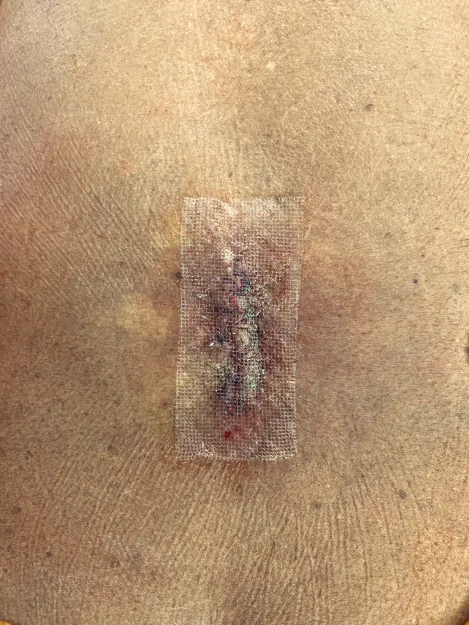
- You can shower and get the area wet. Let gentle soap and water run over the incision. Do not scrub the incision, and please pat dry with a towel.
- If the wound is dry, no further dressings are needed and the incision can be left open to air. Occasionally your incision may bleed and your dressing may get saturated with blood, this is okay. The dressing can be changed to a new, clean dressing.
- Swelling and redness around the incision is normal for the first few weeks after the surgery.
- Do NOT apply any lotions or creams to the incision.
No bending, lifting, or twisting
Follow these restrictions for the first 6 weeks after surgery. Reposition frequently from sitting to standing to walking during the day.
- Walk as much as possible!
- Remember, No BLT!
- Bending - Avoid bending. No squatting if you had surgery that extends to the low back
- Lifting - No lifting over 10 pounds.
- Twisting – Avoid twisting motions. Always turn your entire body in the same direction.
Do not try to do too much too early. Use your common sense. Remember to keep your spine in the neutral position and maintain good posture throughout the day.
Walking
After surgery, regardless of the type you had, the best physical therapy is walking. You should begin with short walks and increase your time and distance as tolerated. This may be walking 5-10 minutes outdoors three times a day initially, increasing your distance every few days, and working up to a total of an hour of walking a day for the first 6 weeks after surgery.
- If you were given a walker after surgery, you will need to use it when out of bed, and it is advised to have someone with you when you are on your walks.
- You may graduate to a cane if you feel steady enough after a few weeks of using the walker.
- If your preoperative pain returns, you are too active and need to slow down a bit, until the pain resolves, then resume walking again.
Diet
Avoid spicy and greasy foods for the first 2 days after surgery. After that, eat whatever you like. You may not feel like eating too much for a few days. Food high in fiber (fruits and vegetables) are good in that they can help reduce constipation. Drink plenty of fluids.
Prescribed medications and pain control
- Oxycodone (Narcotic Pain Medication) may cause constipation, nausea, itching, and excessive drowsiness. Take an over-the-counter stool softener (see below) to reduce constipation. Take over the counter Benadryl (25-50mg) to reduce itching. Narcotic pain medications often cause drowsiness and it is against the law to operate a vehicle while taking these medications.
- Zofran/Ondansetron (Anti-nausea medication): Nausea may be related to either anesthesia or the narcotic pain medication. You may take this medication as necessary.
- Miralax (Stool Softener) Available over the counter at your local pharmacy and should be taken while you are taking narcotic pain medication to avoid constipation. You should stop taking these medications if you develop diarrhea.
If you need refills on your prescriptions, please contact our office 2-3 days before you are out of medications so we have sufficient time to process your request.
As your pain improves, try to increase the time between taking pain pills so that you are taking less and less over time. The goal is to try to get you off of the medications by 2-3 weeks or earlier, if possible. Some people may need medications for longer than 4-6 weeks, and that’s OK. If you find that your pain is really mild, try taking plain extra strength Tylenol instead.
Because your surgery did not involve a fusion, you may take anti-inflammatory medications (NSAIDs, such as ibuprofen [Motrin, Advil] or naproxen [Aleve]) after surgery. If you have any questions about whether you can take a medication or not, call the office.
Physical therapy
At your 6-week follow-up appointment in the clinic, you will be given a prescription for outpatient physical therapy, depending on how well you have recovered so far. You may go to the physical therapist of your choice. Until that time, focus on walking.
Driving
No driving until you are off of all narcotic/sedative medications AND can move well enough to be safe behind the wheel, this is usually after 4-6 weeks from surgery. Check with Dr. Buza at your 6 week follow up visit when you can return to driving.
Return to work
Naturally, you will feel tired and weak after surgery. You will begin to feel more like yourself after 2 to 3 weeks and improve over the following weeks. You should tell your employer you will be out of work for approximately 8 to 12 weeks but may be able to return earlier than that.
Smoking
It is important to avoid all types of nicotine for at least 3 months after your surgery, as this can lead to future complications. (Ex: cigarettes, smokeless tobacco, e-cigarettes, nicotine patches or gum)
Constipation and bloating
A common side effect of narcotic pain medication is constipation.
- If you are taking pain medications, take Miralax as prescribed to prevent constipation
- Be sure to drink 6-8 glasses of water per day
- Eat plenty of fresh fruits & vegetables to prevent constipation. Brown rice, legumes/beans, high fiber cereal, oatmeal, granola, and whole grain bread are also good options.
- If you have not had a bowel movement in 3 or more days, please call your surgeon’s office. You may need to use a fleets enema or suppository (which are available over the counter) so that you can have a bowel movement.
Pain and weakness
Low back pain and muscle spasms are normal after a spine surgery. This usually gets better over the next few weeks. Numbness, tingling and weakness that you had before surgery may take time to improve. If you develop significant new weakness after you get home, you should call the office: 866-670-6824 or go to the Emergency Room.
Normal experiences after surgery:
- Pain: Surgery hurts. The first 72 hours are the worst. It does get better.
- Redness: A small amount around the sutures is normal. If it worsens or spreads, contact us.
- Drainage: A small amount is normal for 2-3 days. If drainage beyond this time, contact the office.
- Fever: Low grade fevers (Less than 101.5°F) may occur during the first week after surgery.
Follow up
Call Dr. Buza’s staff at 866-670-6824 within the first few days after you get home. State that you had surgery and need four-week follow up appointment.
Questions
Feel free to call Dr. Buza’s office with any questions 866-670-6824. During business hours, you will be connected to Dr. Buza’s staff who reports questions or issues to Dr. Buza.
Notify us immediately for any of the following
If any signs of infection are observed while changing the dressing, call your doctor.
- These signs include
- Fever - a body temperature greater than 101.5°F (38°C)
- Significant drainage from the incision(s)
- Opening of the incision(s), and
- Increasing redness or warmth around the incision(s)
In addition, call Dr. Buza’s office if you experience chills, nausea/vomiting, or suffer any type of trauma (e.g., a fall, automobile accident).
Emergency room use
If you have trouble breathing, chest pain, or significant NEW weakness after your surgery, please go to a NYP Emergency Room immediately. If you have any other problems related to your surgery, PLEASE CALL OUR OFFICE at 866-670-6824 BEFORE GOING TO THE EMERGENCY ROOM, as we can likely address your problem or get you an appointment scheduled and save you a trip to the ER.
Common questions after spine surgery
How soon can I have a dental procedure, (i.e. teeth cleaning) after surgery?
There is no restriction on this. You do not need antibiotics before your dental cleaning from Dr. Buza’s perspective. If your dentist wants to give you antibiotics before your procedure, that is his or her decision.
How soon can I travel after surgery, for both car and air travel?
You should wait a minimum of 3 months after surgery to travel by air. You may travel by car sooner, if you take frequent breaks along the way to get out, stretch and walk around. If you can’t avoid air travel before 3 months, please contact your surgeon and discuss this issue before your surgery. Taking a daily aspirin (81-325 mg) one week before, during and one week after your air travel can reduce the risk of developing blood clots in your lungs (pulmonary embolism, which can be fatal) or legs (deep vein thrombosis).
How soon can I go back to work?
This answer often depends on the type of work you do and the type of surgery you had. As a rule, if you had surgery to the front of your neck (anterior approach) or a lumbar decompression surgery, you will most likely be able to get back to work 4-6 weeks after surgery. If you had fusion surgery, it is not unusual to take 8-12 weeks off to recover.
What medications do I need to stop before surgery?
- If you are taking any non-steroidal anti-inflammatories such as Ibuprofen (Advil/Motrin), Naproxen (Naprosyn/Aleve), Aspirin, Mobic (Meloxicam), Relafen (Nabumetone), Voltaren (Diclofenac) etc., please stop them a minimum of seven days before surgery. If you have any questions about what medications that need to be stopped, please contact the office.
- If you are on long-term anti-coagulant treatment (Warfarin, Coumadin, Lovenox, Plavix, Eliquis, Xarelto, etc.), confirm with your prescribing physician when it is safe to stop the medication prior to surgery and when to restart the medication after surgery.
- If you are taking any anti-arthritis medication (Enbrel, Humira, Methotrexate, etc.), please check with the prescribing physician when it is safe to stop (usually two weeks before) and restart (usually 12 weeks after surgery) medication.
- You may continue Tylenol or Acetaminophen up to the day of surgery.
- Stop all herbal supplements and vitamins 1 week (7 days) prior to surgery