
Endoscopic Spine Surgery
Minimally Invasive Spine Surgery Using a Small Camera and Specialized Instruments
Quick Summary
Endoscopic spine surgery is a minimally invasive technique that uses a small camera and specialized surgical instruments to treat certain spine conditions through very small incisions.
Uses a thin endoscope (camera) to visualize the spine
Allows surgery through very small incisions
May reduce disruption to surrounding muscles and tissues
Often used to treat disc herniations and nerve compression
Designed to relieve nerve pain, numbness, and weakness
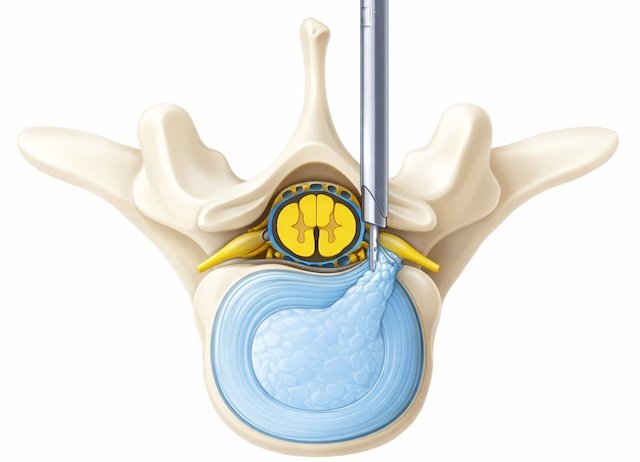
What Is Endoscopic Spine Surgery?
Endoscopic spine surgery is a type of minimally invasive spine surgery that uses a small camera called an endoscope to visualize structures inside the spine.
The camera is inserted through a small incision and provides a magnified view of the surgical area on a monitor. This allows the surgeon to perform precise procedures using specialized instruments inserted through the same small opening.
Endoscopic techniques can allow surgeons to access the spine while minimizing disruption to surrounding muscles and soft tissues.
How Does Endoscopic Spine Surgery Work?
During endoscopic spine surgery:
A small incision is made near the affected area of the spine.
A thin camera (endoscope) is inserted to visualize the surgical site.
Specialized instruments are used to remove disc material or bone that is compressing a nerve.
The surgeon monitors the procedure using a high-definition video display.
This approach allows the surgeon to treat nerve compression while preserving surrounding tissues as much as possible.
What Conditions Can Be Treated with Endoscopic Spine Surgery?
Endoscopic techniques may be used to treat certain spine conditions, including:
Lumbar disc herniation
Lumbar radiculopathy (sciatica)
Certain cases of lumbar spinal stenosis
Nerve compression causing leg pain or numbness
The most appropriate surgical approach depends on the location and type of spinal problem.
Benefits of Endoscopic Spine Surgery
Potential advantages of endoscopic techniques may include:
Very small surgical incisions
Reduced disruption of surrounding muscles
Precise visualization of nerve structures
Less postoperative discomfort for some patients
Faster recovery for certain procedures
However, the most important goal of any spine surgery is effectively treating the underlying condition.
Is Endoscopic Surgery Right for Every Patient?
Endoscopic spine surgery can be very effective for certain conditions, but not every spine problem can be treated using endoscopic techniques.
Factors that influence the choice of surgical approach include:
The type of spine condition
The location of nerve compression
The number of spinal levels involved
Prior spine surgery
Spinal stability and alignment
Your surgeon will recommend the surgical approach that provides the best and safest treatment for your specific condition.
Most Commonly Asked Questions
-
Endoscopic surgery uses a small camera inserted through a tiny incision to visualize and treat the surgical area.
-
Endoscopic surgery is a form of minimally invasive spine surgery, but not all minimally invasive procedures are endoscopic.
-
Some patients experience quicker recovery due to smaller incisions and reduced muscle disruption, although recovery varies depending on the procedure.
-
No. While endoscopic techniques are useful for certain problems, other spine conditions may require different surgical approaches.

When should I see a spine specialist?
You should seek evaluation if you have:
Back pain lasting more than several weeks
Leg pain, numbness, or weakness
Symptoms that interfere with daily activities
Early evaluation can help guide appropriate treatment.