
Cervical Laminoplasty
Motion-Preserving Surgery to Relieve Spinal Cord Compression in the Neck
Quick Summary
Cervical laminoplasty is a surgical procedure used to relieve pressure on the spinal cord in the neck while preserving motion of the cervical spine.
Commonly performed for multilevel cervical spinal stenosis and cervical myelopathy
Performed through an incision in the back of the neck
Expands the spinal canal to relieve pressure on the spinal cord
Preserves motion of the cervical spine
Often improves balance, coordination, and hand function
What Is Cervical Laminoplasty?
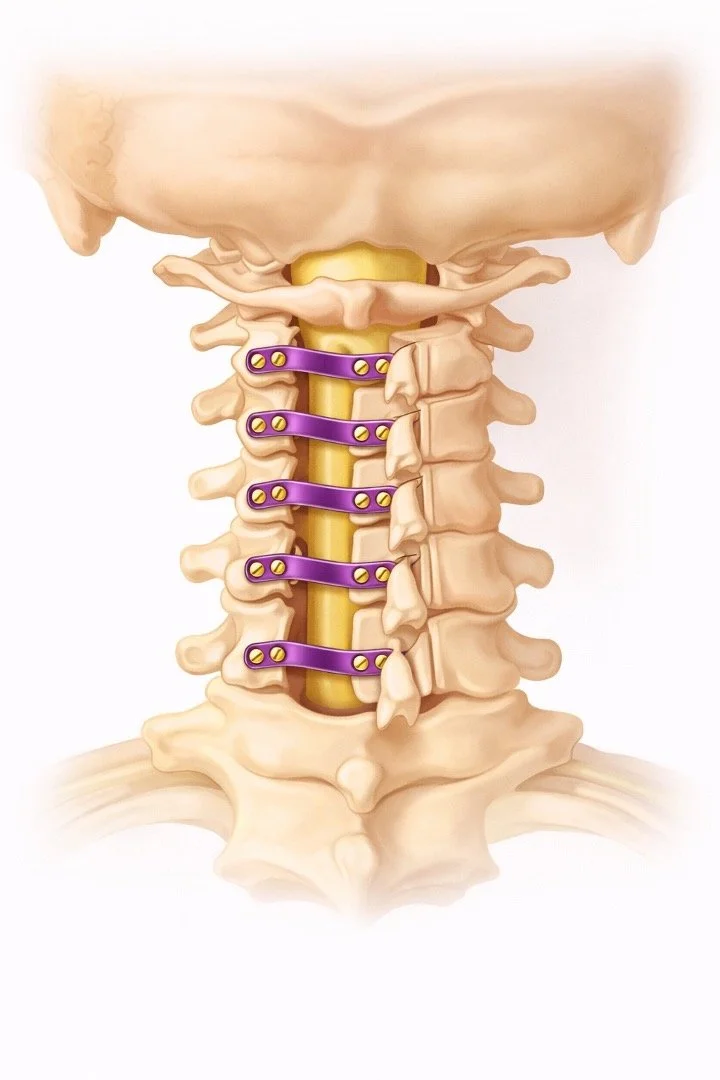
Cervical laminoplasty is a procedure designed to relieve pressure on the spinal cord in the cervical spine.
The spinal cord travels through a protective bony canal formed by the vertebrae. In conditions such as cervical spinal stenosis, this canal can become narrowed and compress the spinal cord.
During laminoplasty, the surgeon reshapes and repositions part of the vertebra to expand the spinal canal, creating more space for the spinal cord.
Unlike fusion surgery, laminoplasty is designed to preserve movement of the cervical spine.
When Is Cervical Laminoplasty Recommended?
Cervical laminoplasty is often recommended for patients with multilevel spinal cord compression in the neck.
Common conditions treated include:
Cervical spinal stenosis
Cervical myelopathy
Multilevel degenerative changes in the cervical spine
This procedure may be considered when spinal cord compression occurs across several levels and the spine remains stable and well aligned.
How Is Laminoplasty Performed?
Cervical laminoplasty is performed through an incision in the back of the neck.
During the procedure:
The surgeon gently moves muscles aside to access the cervical spine
A portion of the bone covering the spinal canal (the lamina) is carefully opened
The lamina is repositioned to create more space for the spinal cord
Small implants or plates may be used to maintain the expanded canal
By expanding the spinal canal, laminoplasty allows the spinal cord to move away from areas of compression.
The procedure typically takes several hours, depending on the number of levels treated.
Benefits of Cervical Laminoplasty
Potential benefits include:
Relief of spinal cord compression
Preservation of motion in the cervical spine
Improvement in balance and coordination
Improvement in hand function and dexterity
Prevention of further neurologic decline
For patients with cervical myelopathy, surgery is often performed to prevent worsening neurologic symptoms and improve function.
Laminoplasty vs Cervical Fusion
Both laminoplasty and cervical fusion procedures are used to treat spinal cord compression in the neck.
Cervical Laminoplasty
Expands the spinal canal
Preserves motion of the cervical spine
Typically used for multilevel spinal cord compression when the spine is stable
Posterior Cervical Fusion
Stabilizes the spine using screws and rods
Eliminates motion at the fused levels
Often used when instability or deformity is present
Your surgeon will recommend the most appropriate procedure based on the specific condition of your spine.
Recovery After Cervical Laminoplasty
Recovery varies depending on the number of levels treated and the patient’s overall health.
Typical recovery includes:
Walking soon after surgery
Hospital stay of one to several days
Gradual return to normal activities
Physical therapy to improve strength and mobility
Most patients are able to resume many normal activities within several weeks, although neurologic recovery may continue over time.
Risks and Considerations
Laminoplasty is a commonly performed procedure for spinal cord compression, but all surgeries carry potential risks.
Possible risks include:
Infection
Bleeding
Nerve irritation
Neck stiffness
Persistent neurologic symptoms
Your surgeon will discuss the risks and benefits based on your individual condition.
When Should Laminoplasty Be Considered?
Laminoplasty may be appropriate when:
Multilevel spinal cord compression is present
Symptoms of cervical myelopathy develop
The cervical spine remains stable and well aligned
Motion preservation is desirable
When performed for the correct indications, laminoplasty can provide effective relief of spinal cord compression while preserving motion of the neck.
Most Commonly Asked Questions
-
Laminoplasty means reshaping and repositioning part of the vertebra to expand the spinal canal and relieve pressure on the spinal cord.
-
Yes. Laminoplasty is designed to preserve motion of the cervical spine.
-
Laminoplasty is an effective treatment for cervical spinal cord compression, particularly when multiple levels are involved.
-
The procedure typically takes several hours, depending on the number of levels treated.
-
Many patients experience improvement in balance, coordination, and hand function, although recovery varies between individuals.

When should I see a spine specialist?
You should seek evaluation if you have:
Neck or arm pain persists despite treatment
You develop weakness, numbness, or coordination problems
Symptoms that interfere with daily activities
Early evaluation can help guide appropriate treatment.